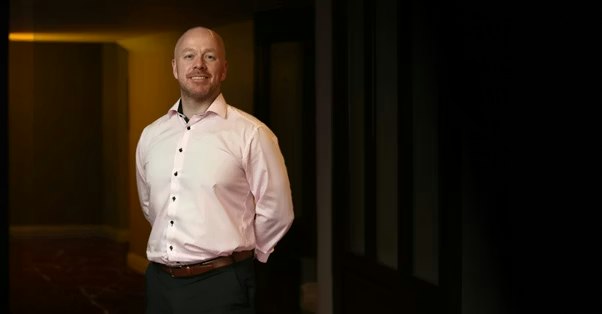
Author: IRPA AI Senior Analyst, Kieran Gilmurray
The New Reality: Deepfakes At Scale
Deepfakes have moved from novelty to nuisance to systemic risk. In the past year, reported incidents globally climbed by an order of magnitude, including a 1,740% rise in North America. This spike coincides with tools that lower the bar: 20–30 seconds of audio can seed convincing voice clones, and full synthetic videos can be assembled in under an hour using accessible software. That accessibility changes the threat model. What once took specialised skill now requires only a browser and curiosity. Voice impersonations, face swaps, and synthetic scenes are no longer rare. They are becoming routine attack vectors in fraud, harassment, and disinformation.
An Authenticity Crisis: Seeing Is No Longer Believing
Public anxiety is mounting. Surveys show that 74% worry about deepfakes’ societal impact, and 68% are concerned about their role in fake news. Trials suggest people correctly identify deepfake videos only 55–60% of the time, barely above chance. In one mixed-media test, 0.1% of consumers consistently separated real from fake. The stakes are larger than individual hoaxes. Experts warn of the “liar’s dividend,” where genuine evidence is dismissed as fake when inconvenient. Trust in digital content is eroding, a problem for courts, elections, journalism, and everyday life.
High-Profile Misuse: A Snapshot
Politics and elections.
In 2022, a fake video portrayed Ukraine’s President Zelenskyy capitulating; it aired on a hacked TV feed before being debunked. In 2023, a deepfake audio in Slovakia’s election suggested a candidate discussed fraud, a stunt analysts called a new era of disinformation. Officials now assume election cycles will face synthetic media incidents.Corporate and financial fraud.
In 2024, criminals used live video impersonations of a company’s executives to run a $25 million transfer. Other firms report near-misses with AI-cloned CEO voices. Reports cite a 1,740% rise in deepfake fraud cases regionally and losses exceeding $200 million in early 2025.Scams and extortion.
AI kidnapping” calls use cloned voices of loved ones to demand ransom. Banks and consumers face synthetic caller scams that exploit urgency and trust.Non-consensual explicit content.
Investigations found nearly 4,000 female celebrities targeted, with just five top sites drawing 100+ million views in three months. Victims include journalists and ordinary people, with severe reputational and mental-health harm.Viral hoaxes.
A fabricated image of an explosion near the Pentagon briefly moved markets. A synthetic photo of Pope Francis in a designer coat fooled millions. Even when debunked quickly, such hoaxes show how quickly synthetic content can spread.
The Arms Race: Detection vs. Generation
New AI systems called multimodal detectors combine signals from a person’s face, voice, and background data to spot deepfakes. By analysing facial expressions, speech patterns, and digital traces together, they can identify fake videos with reported accuracy rates of 94–96% in lab tests. Yet field conditions remain harsher than lab tests. Detectors can degrade significantly on new, in-the-wild samples. Attackers iterate rapidly, exploiting model blind spots or laundering outputs through paraphrasing and re-encoding.
The asymmetry is real: it is cheaper and faster to make a good fake than to prove it is fake. That is why authenticity infrastructure is gaining momentum. Watermarking and content credentials can mark synthetic media at creation. Cryptographic signing at capture can verify genuine images and videos, allowing platforms to trust-promote signed originals and demote unsigned lookalikes.
Provenance standards and camera-level signing would help anchor reality in a world of synthesis. Legal and platform policies are the third leg. Clear sanctions for malicious deepfakes, fast takedown pathways, and liability incentives for platforms to label synthetic media are part of the response. So is product design: friction and prompts that nudge users to verify before sharing can slow virality.
Law and Policy: Fast-Moving, Uneven
Regulators are responding on multiple fronts. In the United States, the proposed No AI FRAUD Act would outlaw unauthorised synthetic likenesses used to defraud or cause harm, complementing a patchwork of state laws restricting election-period deepfakes and enabling civil action against deepfake pornography. Agencies are weighing transparency rules requiring clear labels for synthetic media.
The UK’s Online Safety Act criminalises sharing explicit deepfake imagery without consent. The European Union’s AI Act is set to impose disclosure requirements and penalties for malicious misuse, with separate efforts targeting election integrity. China’s regime already mandates labels on altered media and removes undisclosed deepfakes at the platform level, a strict model with its own trade-offs. Cross-border enforcement remains a challenge. Defining harmful deepfakes precisely, carving out satire and legitimate uses, and coordinating take-downs across jurisdictions will take sustained work. Still, the direction of travel is clear: malicious deepfakes are moving from a grey area to regulated harm.
Balancing Innovation and Misuse
The same techniques that enable abuse also power creative and beneficial applications. Film and gaming use synthesis for dubbing and effects. Accessibility advances make content available across languages and modalities. The goal is not to halt progress, but to channel it responsibly. That balance requires layered defences. Invest in detection and provenance. Bake disclosure into tools and platforms. Teach media literacy so people pause before they share. And calibrate law to target harmful uses without chilling expression.
What Organisations Should Do Now
Authenticate the authentic. Adopt content credentials and signing for high-value media; prefer signed assets in workflows and publishing.
Integrate detection. Deploy multimodal detectors in communications and security pipelines; set playbooks for suspected incidents.
Harden processes. Require secondary verification for sensitive requests made via voice or video; use code words or callbacks for wire approvals and executive asks.
Prepare people. Train employees and customers on common deepfake patterns, response steps, and reporting channels; run drills like any other incident type.
Conclusion: Rebuilding Trust, One Layer at a Time
Deepfakes have created a reality gap. The solution is not a single tool, but a system: provenance for the real, proportionate rules for the harmful, better detectors for the rest, and a public equipped to pause and verify. If we build those layers together, deepfakes become a manageable risk rather than a crisis of authenticity. The fight for reality in the age of AI has started; so has the toolkit to win it.
FAQs
Can people learn to spot deepfakes reliably
Training helps, but humans alone remain poor detectors. Pair awareness with technical tools and provenance.What works best today: detection or watermarking
Both. Detection flags likely fakes; watermarking and content credentials prove what is genuine.How should companies defend against executive-impersonation fraud
Use multi-channel verification for approvals, known-phrase challenges, and mandatory callbacks. Never rely on voice or video alone.Are social platforms required to label synthetic media
Rules vary by country. Many proposals would mandate labels for AI-generated content and penalties for undisclosed malicious use.Is there a safe way to use these tools creatively
Yes. Follow disclosure norms, obtain consent for likeness use, and adhere to platform and legal requirements.
About Kieran Gilmurray
Kieran is a globally recognized authority on AI, automation, and digital transformation, having authored multiple influential books and hundreds of articles that have earned him prestigious accolades, including being named a Top 50 Global Thought Leader and Influencer on Generative AI in 2024, a Best LinkedIn Influencer for AI and Marketing, Top 50 Global Thought Leaders and Influencers on Manufacturing 2024, Top 14 people to follow in data and one of the World’s Top 200 Business and Technology Innovators.
CLICK HERE TO SCHEDULE AN ANALYST CHAT
Links:
Originally posted in the IRPA AI Network — Announcements & Updates