In the current era of technological upheaval, the rapid advancement of artificial intelligence (AI) and automation is both a blessing and a curse for business leaders. The overwhelming proliferation of new concepts, terminologies, and automation platforms contributes significantly to the "information chaos" that CEOs must navigate.
This chaos undermines trust and complicates the effective adoption of AI technologies.
The Proliferation of AI Acronyms - Agents Mania
The AI industry is notorious for its jargon, with acronyms like Agentic Process Automation (APA), Autonomous Agents (AA), and Intelligent Process Automation (IPA) becoming commonplace. These terms often have nuanced meanings that can be confusing even to experienced professionals.
These overlapping terms contribute to a sense of chaos and uncertainty among business leaders, complicating decision-making and strategic planning. A study by IBM revealed that while 64% of CEOs believe AI success hinges on people's adoption rather than the technology itself, over half have not assessed the impact of AI on their workforce. The myriad of acronyms and inconsistent definitions further erode confidence, making it difficult for CEOs to develop clear strategies for AI integration.
Furthermore, the lack of standardized definitions means that different organizations might interpret and implement these technologies differently. This inconsistency can result in fragmented approaches to AI adoption, where companies struggle to align their strategies with industry best practices.
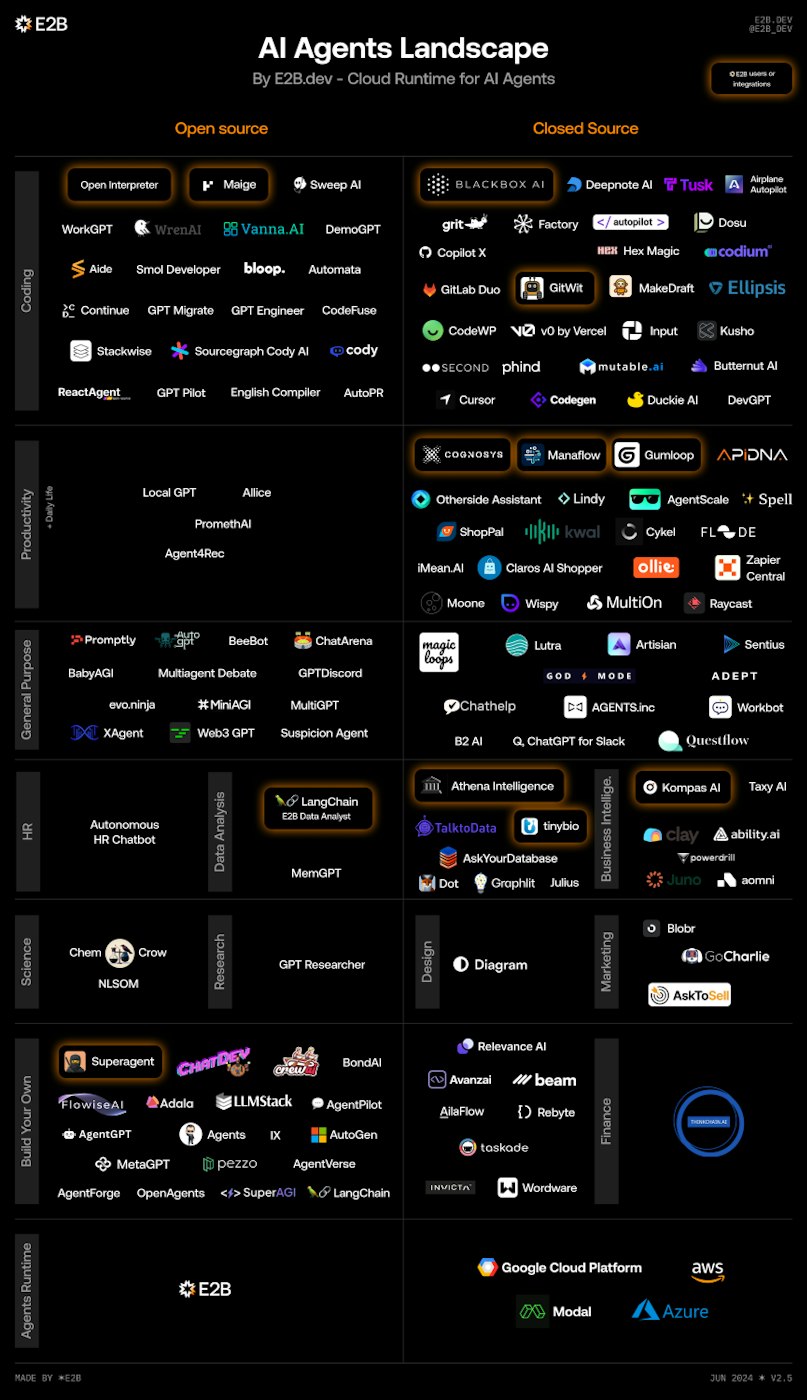
AI Agents Landscape by B2B.dev
Chaos in Automation Platform Solutions
The chaos is not limited to terminology. The rapid proliferation of automation platforms adds another layer of complexity. Each platform offers a unique set of tools and capabilities, often accompanied by its own set of acronyms and jargon. For example, platforms like UiPath, Automation Anywhere, and Blue Prism each have distinct approaches to robotic process automation (RPA) and intelligent automation, further muddying the waters.
CEOs must decide which platform best suits their needs, but the decision is often clouded by conflicting information and marketing hype. A report by BCG Global noted that 90% of CEOs are either waiting for generative AI to move past the hype or experimenting cautiously. This cautious approach reflects the confusion and mistrust caused by the sheer number of competing solutions and the complexity of integrating them into existing business processes.
Data and Governance Challenges
The information chaos around AI and automation is compounded by data and governance challenges. The Workday survey highlighted that 59% of organizations report their data is siloed, making effective AI integration difficult. This lack of accessible and high-quality data exacerbates the mistrust and complicates efforts to implement AI technologies effectively.
Governance is another critical issue. Effective AI governance requires a clear understanding and precise language to set appropriate policies and standards. However, the proliferation of acronyms and terminologies can lead to gaps in governance, where critical aspects of AI deployment might be overlooked or misunderstood. This can result in significant risks, including data privacy breaches, algorithmic bias, and ethical concerns.
 AI Governance Framework by NextGen Invent
Navigating the Chaos
To navigate this technological and informational chaos, CEOs need to prioritize several key actions:
- Standardization and Education: Industry leaders and organizations should work towards standardizing AI terminology and acronyms. Developing comprehensive glossaries and educational resources can ensure consistent understanding across the board.
- Transparent Communication: Clear and transparent communication about AI technologies and their implications is essential. CEOs should encourage open discussions within their organizations to demystify AI terms and foster a culture of continuous learning.
- Robust Governance Frameworks: Implementing robust AI governance frameworks that emphasize clarity and precision in terminology can help mitigate risks. These frameworks should address data management, ethical considerations, and regulatory compliance comprehensively.
- Collaborative Efforts: Collaboration between industry stakeholders, academia, and policymakers can facilitate the development of standardized terminologies and best practices. By working together, these groups can help reduce the information chaos and build a more coherent and trustworthy AI landscape.
In conclusion, the era of technological chaos, characterized by the proliferation of AI acronyms, terminologies, and competing automation platforms, presents significant challenges for CEOs. By focusing on standardization, transparent communication, robust governance, and collaborative efforts, business leaders can navigate this chaos effectively and harness the full potential of AI technologies.
Content Credit: Pedro Martins
https://www.linkedin.com/in/pedro-sequeira-martins/
Links:
Originally posted in the IRPA AI Network — Intelligent Automation