The Evolution of Intelligent Document Processing
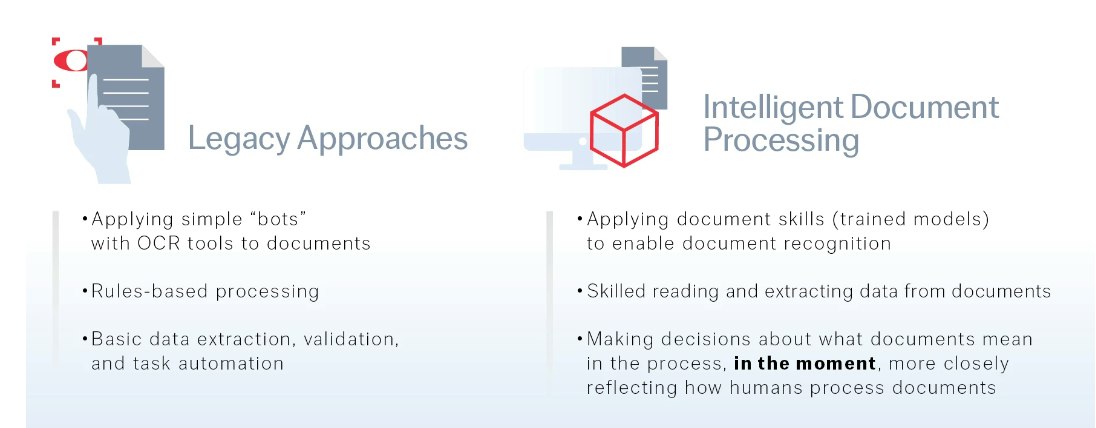
Before intelligent document processing, managing the influx of documents was a laborious, error-prone endeavor. Manual data entry and paper-based processes led to bottlenecks and costly mistakes. Legacy OCR solutions offered some relief, but lacked the intelligence to truly understand and extract meaningful information. Companies were left grappling with large amounts of unstructured data, struggling to keep up with fast-paced business demands.
IDP, combining the power of advanced OCR and AI, changed that status quo. By incorporating machine learning and NLP, IDP solutions can now not only extract data but also understand context, classify documents, and make intelligent decisions. This is a big leap forward that ushers in a new era of accuracy and efficiency.
What’s next for IDP? The future of intelligent document processing is set to revolutionize how businesses and IT professionals handle vast amounts of data, delivering even greater value to businesses through:
- Enhanced AI and ML capabilities, making it possible to handle increasingly complex documents with increasing accuracy and efficiency
- Predictive analytics, where IDP systems will be able to analyze historical data and forecast trends and patterns in document data, enabling businesses to make even more informed decisions
- Greater customization and flexibility, enabling businesses to tailor the solution to their specific needs and making IDP accessible to a wider range of industries and applications
- More integrations with other enterprise technologies such as enterprise resource planning (ERP) systems, customer relationship management (CRM) systems, robotic process automation (RPA), and business process management (BPM), enabling seamless workflows and even greater business efficiency.
For more information on Intelligent Document Processing, use cases or to schedule your industry briefing CLICK HERE.
Sponsored by:

Links:
Originally posted in the IRPA AI Network — Intelligent Automation