
media modifier on Unsplash.com
Author: Kieran Gilmurray
The Changing Landscape of Search
Over the past two decades, Search Engine Optimization (SEO) has been the backbone of digital marketing. In the early days, stuffing web pages with keywords was often enough to rank higher in search engine results. As search algorithms grew more sophisticated, factors like backlinks, user experience, and page speed became crucial.
Now, a new wave of technology is reshaping how we find and consume information. Artificial intelligence (AI) is no longer limited to predictive text or simple voice assistants; we’re witnessing a surge in generative AI, where tools like Google’s Search Generative Experience (SGE) and Microsoft Edge Copilot deliver synthesized, conversational responses to user queries. This shift has given rise to Generative Engine Optimization (GEO) - an emerging strategy that aligns digital content with the way AI-driven search engines understand and generate answers.
Traditional SEO: How It Works & Its Limitations
Traditional SEO is anchored in the principle of relevance. Search engines crawl websites, index their content, and evaluate a range of signals to determine what ranks in the coveted top positions of Search Engine Results Pages (SERPs). These signals often include:
- Keyword Relevance: The extent to which page content matches user queries.
- Backlinks and Domain Authority: The quantity and quality of inbound links from other reputable sites.
- Technical SEO: Website performance, mobile-friendliness, structured metadata, and site architecture.
Despite its effectiveness, traditional SEO comes with certain limitations. Firstly, SERPs still require clicks to funnel users from search results to a website. Secondly, algorithms constantly change so marketers must adapt to shifting best practices. Thirdly, even top ranking pages can struggle to maintain visibility if competition or algorithmic updates push them down.
As user behaviour evolves, shifting from typing text queries (e.g., "best coffee NYC") to speaking conversational prompts (e.g., "Where can I find the best coffee shop in New York City?"), traditional SEO strategies that rely heavily on matching exact keywords might not perform as well. Users increasingly expect direct answers instead of a list of links, which is why AI-driven responses are gaining traction.
The Rise of Generative Search & AI-Driven Answers
In contrast to traditional search engines, generative search engines like Google’s SGE and Bing Chat don’t just serve up a list of hyperlinks, they compile information from multiple sources, then deliver a concise, conversational answer. This approach changes user behaviour and expectations:
- Less Clicking: Instead of scanning ten different websites, users often get immediate, synthesized insights.
- Contextualized Responses: Generative AI attempts to understand user intent, weaving multiple sources of data into a unified answer.
- Continuous Interaction: Tools like ChatGPT and Bing Chat invite follow-up questions and deeper clarification, creating a back-and-forth conversation rather than a single transaction.
These shifts mean that being “the first link” is no longer enough; brands must ensure their content is recognized as trustworthy and relevant within the AI’s synthesized responses.
Key Differences Between GEO and Traditional SEO
Below is a quick-reference table outlining how Generative Engine Optimization (GEO) stands apart from traditional SEO:

Why can’t you just apply the same SEO tactics to generative search? Because AI-driven search extracts “snippets” of context from multiple sources. If your site lacks clarity, structured data, or recognized authority, the AI engine may side line your content even if you have strong traditional SEO signals.
How to Optimize for Generative AI Search
GEO demands a fresh approach that combines the best of traditional SEO with new, AI focused strategies. Here’s how:
1. Use Structured Content
- Break down information using headings, bullet points, and short paragraphs.
- Employ FAQ blocks, bullet points, and direct answer formats to help AI parse key points quickly.
2. Adopt Entity Based SEO
- Focus on core topics or “entities” relevant to your brand.
- Link these entities to authoritative pages (or your own high authority content).
- Clearly define people, places, products, or concepts in a manner that AI can recognize and associate with you.
3. Write Conversationally
- AI systems excel at natural language processing. Content that addresses user questions in a clear, conversational tone stands a better chance of being used in generative answers.
4. Leverage Schema Markup and Knowledge Graphs
- Schema markup (such as FAQ, How To, or Product schemas) is a form of structured data that helps search engines and by extension AI systems better interpret the meaning and context of your content.
This is because Google’s SGE or Bing Chat don’t just crawl websites like traditional search engine, they synthesize content from multiple sources to provide coherent, conversational answers.
Schema markup clearly labels key parts of your content in a machine readable way. This makes it much easier for generative AI to understand and extract relevant, accurate snippets from your site.
- By adding specific tags (often in JSON-LD format) to your pages, you effectively label different elements: questions, answers, product details, recipes, reviews, etc. This “labelling” makes it easier for AI to find and use the most relevant segments of your content in its responses.
- When you implement structured data correctly, your pages may become part of knowledge graphs, which are vast, interconnected databases of information that generative AI tools consult to answer queries. Proper schema usage can lead to enhanced visibility, rich snippets, and more authoritative placement within AI generated summaries.
5. Showcase Authority and Credibility
- Cite sources, link to reputable references, and include statistics and expert quotes to reinforce your trustworthiness.
- AI powered search tools often rank authoritative, well cited content higher in their synthesizing process.
The Future of Search & What Marketers Should Do Now
Will SEO die?
Hardly.
Traditional SEO is evolving, and it remains vital for general website optimization and user experience. However, marketers must adapt to AI’s growing prominence. Here’s what you can do:
- Monitor AI Platforms: Stay aware of how Google’s SGE, Bing Chat, and emerging AI tools display results. Pay attention to what types of content they pull.
- Diversify Content Distribution: Ensure your brand is present across multiple authoritative platforms such as blogs, social media, industry databases, Q&A sites.
- Experiment & Iterate: The AI landscape changes quickly. Test different content formats, measure how often AI references your material, and refine your approach accordingly.
- Stay User-Centric: As AI evolves, it will focus more heavily on true user intent. Create solution-oriented content that directly addresses real world questions.
Conclusion: Embracing the New Era of Search
As AI powered tools redefine how people seek information, Generative Engine Optimization (GEO) emerges as the next critical chapter in digital marketing. While traditional SEO won’t vanish, it must coexist with AI driven strategies that emphasize clarity, authority, and contextual relevance. By optimizing for entities rather than just keywords, leveraging schema markup, and embracing conversational content, businesses can thrive in a world where users increasingly expect instant, tailored answers.
The digital landscape has changed before, and it’s changing again. Staying ahead means embracing GEO, continually fine-tuning your content strategy, and ensuring your brand’s expertise is visible to both people and the AI systems guiding their searches. Now is the time to evolve, experiment, and stay proactive in the new era of AI driven search.
About the Author: Kieran Gilmurray
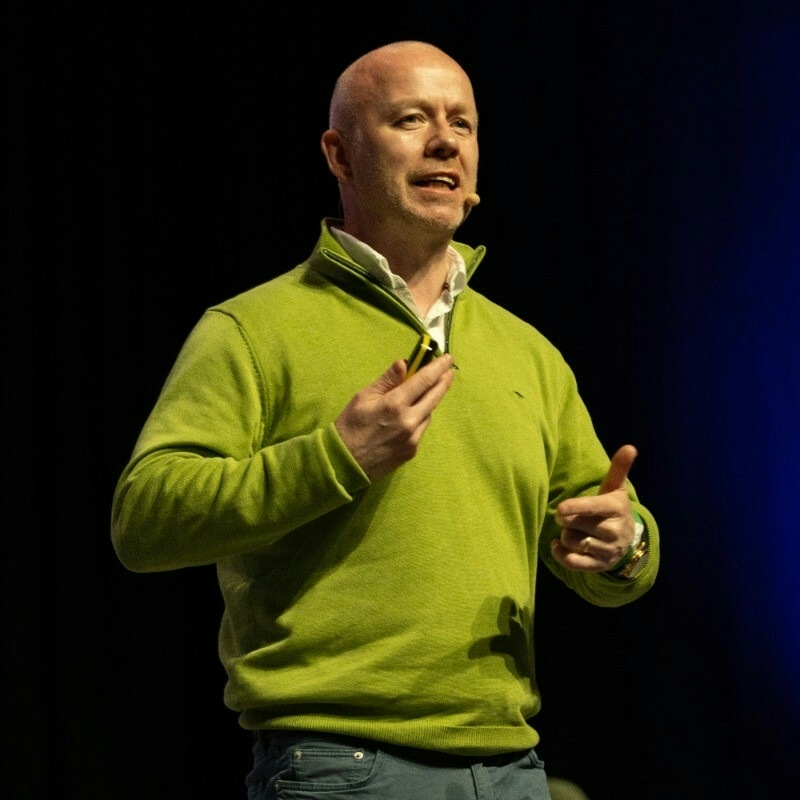
Senior IRPA AI Analyst & Advisor, Kieran Gilmurray is a certified executive coach, intelligent automation & digital transformation thought leader & content guru focused on helping solve complicated problems others can't. For the past 25+ years, he has driven business digital transformation programs across a range of industries like digital technologies, intelligent automation, data analytics, social media and robotic process automation, having generated millions of dollars of value.
CLICK HERE TO SCHEDULE AN ANALYST CHAT
Links:
Originally posted in the IRPA AI Network — Enterprise AI